Small company bookkeeping often becomes overwhelming when business owners try to handle everything themselves. Poor financial record-keeping leads to tax problems, cash flow issues, and missed growth opportunities.
We at Optimum Results Business Solutions see businesses struggle with disorganized finances daily. This guide covers the essential systems and practices that will streamline your bookkeeping process and protect your business from costly mistakes.
Essential Bookkeeping Tasks for Small Businesses
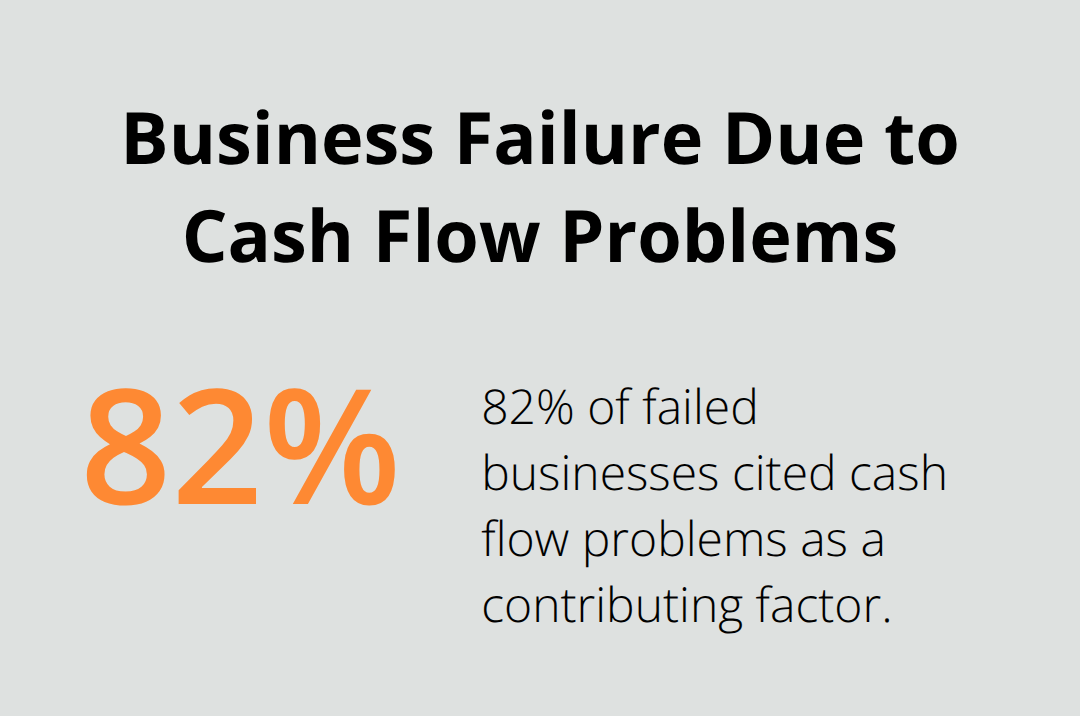
Small businesses must handle three fundamental bookkeeping tasks daily to maintain financial control. Poor transaction records cause 82% of businesses that failed to cite cash flow problems as a factor in their failure. Every sale, expense, and payment needs documentation within 24 hours. This includes credit card purchases, bank transfers, cash transactions, and online payments.
Transaction Recording Systems
Modern accounting software like QuickBooks Online or Xero automatically imports bank transactions, but you must categorize each entry correctly. Set up your chart of accounts with specific categories like office supplies, marketing expenses, and professional services before you start. Small businesses that process fewer than 50 transactions monthly can manage with basic spreadsheets, but higher volumes require dedicated software. Connect your business bank account and credit cards to your accounting platform to eliminate manual data entry errors (which cost businesses an average of $62,000 annually according to IBM research).
Customer Payment Management
Accounts receivable management directly impacts your cash flow timeline. Send invoices within 24 hours after you complete work and set payment terms at 15 days maximum instead of the standard 30 days. Businesses that invoice immediately collect payments faster than those who delay bills. Track overdue accounts weekly and send automated reminders through your accounting software. Schedule bill payments to take advantage of early payment discounts while you maintain sufficient cash reserves.
Bank Statement Reconciliation
Monthly bank reconciliation catches errors before they compound into major problems. Download your bank statements and credit card statements on the same day each month, then match every transaction to your accounting records. Unmatched items usually indicate duplicate entries, missing transactions, or bank fees you forgot to record. This process takes 30-45 minutes monthly for businesses with standard transaction volumes but saves hours during tax season.
The right bookkeeping system makes these daily tasks flow smoothly and reduces the time you spend on financial management.
Choosing the Right Bookkeeping System
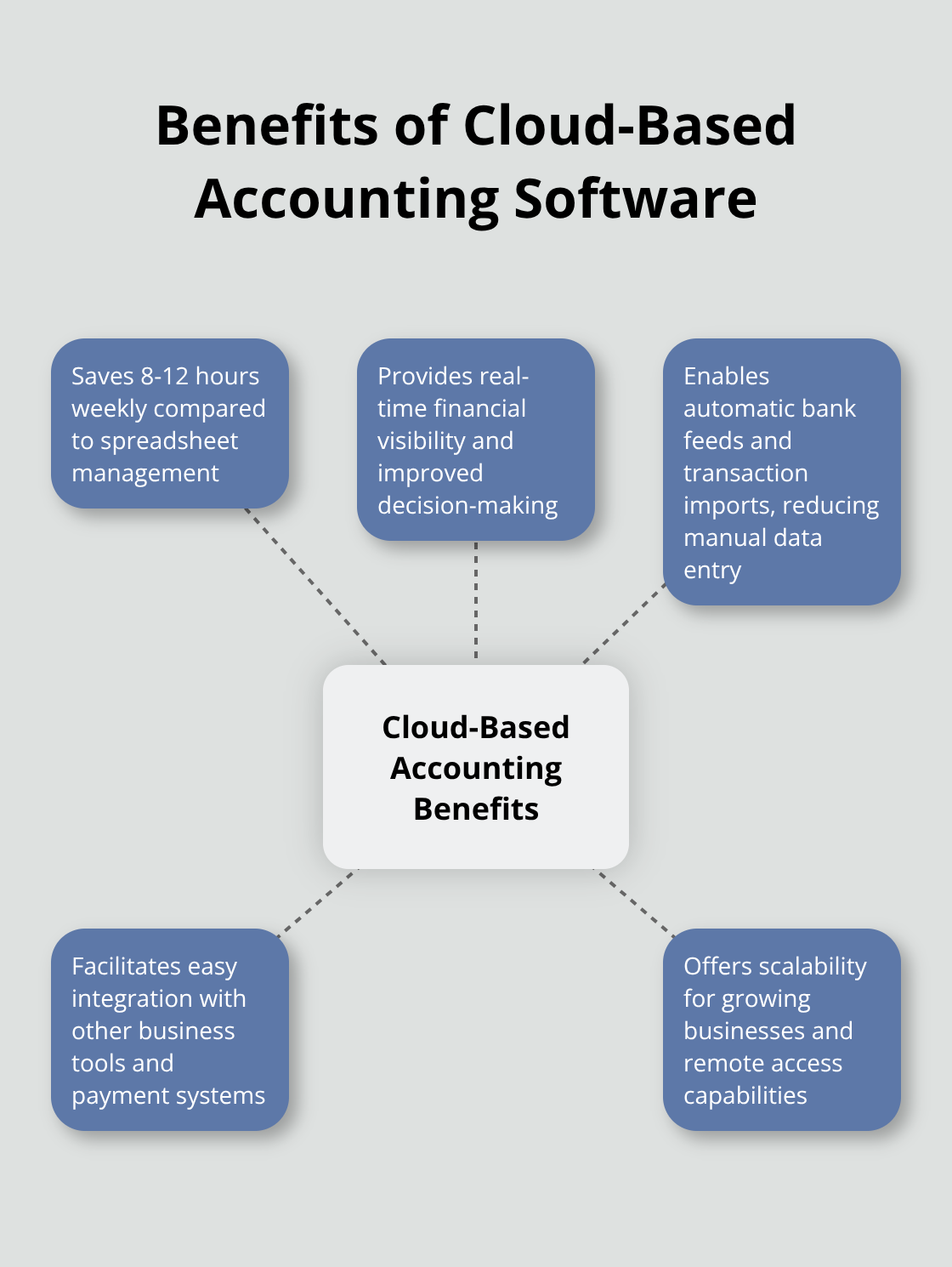
Cloud-based accounting software provides significant advantages for small and medium enterprises looking to modernize their financial management. QuickBooks Online holds 80% market share among small businesses, while Xero serves 3.95 million subscribers globally and FreshBooks targets service-based companies specifically. These platforms cost $15-45 monthly but save 8-12 hours weekly compared to spreadsheet management. Manual bookkeeping works only for micro-businesses with fewer than 20 transactions monthly – anything above this volume creates data entry bottlenecks that damage cash flow tracking.
Software Integration Features
Your accounting software must connect directly to your business bank accounts and payment processors like Square, Stripe, or PayPal. Automatic bank feeds reduce manual data entry and enhance overall efficiency across multiple systems, while real-time transaction imports reduce monthly reconciliation time from 4 hours to 30 minutes. Choose software that integrates with your existing tools – if you use Shopify for e-commerce, pick QuickBooks Commerce or Xero which sync inventory and sales data automatically. QuickBooks Online integrations can maximize productivity when implemented effectively. Avoid software that requires manual CSV imports or lacks API connections to your payment systems.
Implementation Strategy
Set up your new bookkeeping system during your slowest business month to minimize disruption. Import 12 months of historical bank data to establish spending patterns and create accurate financial reports from day one. Configure automated rules for recurring transactions like rent, utilities, and subscription services – this saves 2-3 hours monthly on categorization. Train yourself or your team on the software basics before you switch from your old system. Most businesses need 2-3 weeks to fully transition to cloud-based bookkeeping (but the time investment pays back within the first quarter through improved financial visibility and reduced administrative overhead).
Even the best bookkeeping system fails when business owners make fundamental mistakes that compromise their financial accuracy.
Common Bookkeeping Mistakes and How to Avoid Them
Small business owners lose an average of $18,000 annually due to preventable bookkeeping errors according to the Association of Certified Fraud Examiners. The IRS flags 67% more returns with mixed personal and business expenses for audit review. These costly mistakes damage cash flow and create compliance problems that threaten business operations.
Personal and Business Expense Separation
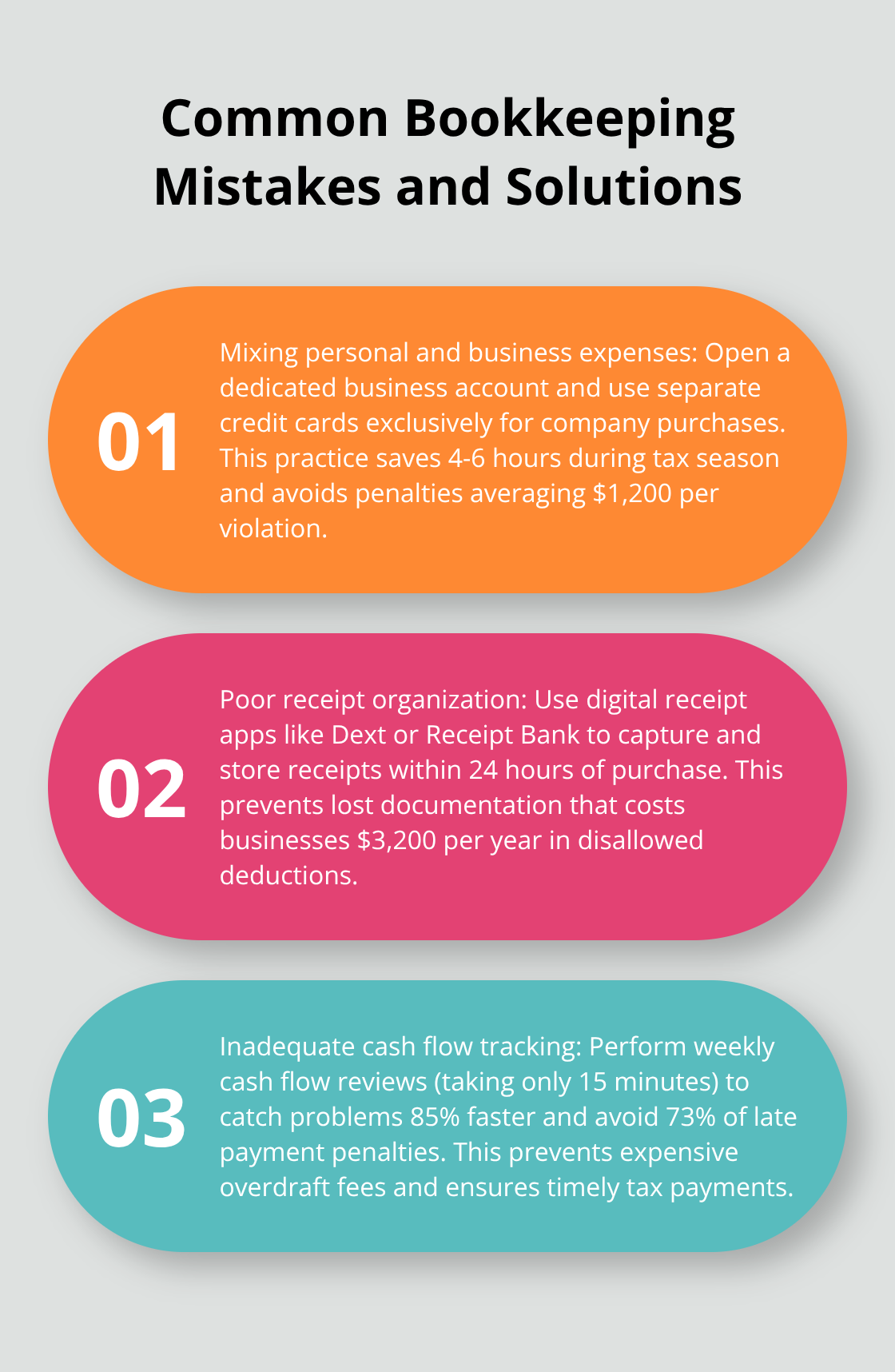
Personal purchases on business cards must be reclassified immediately as owner draws, not business expenses. Open a dedicated business account and use separate credit cards exclusively for company purchases. Never pay personal bills from business accounts, even temporarily (this practice destroys your limited liability protection and complicates tax preparation significantly).
The IRS requires clear separation between personal and business finances. Mixed transactions trigger audit flags and can result in denied deductions worth thousands of dollars. Business owners who maintain separate accounts save 4-6 hours during tax season and avoid penalties that average $1,200 per violation.
Receipt Organization and Storage
Paper receipts fade within 18 months and create audit problems when documentation disappears. Digital receipt apps like Dext or Receipt Bank capture expenses instantly and integrate with accounting software automatically. Store receipts within 24 hours of purchase – delays lead to lost documentation that costs businesses $3,200 per year in disallowed deductions according to IRS data.
Photograph receipts immediately after purchase and categorize them on your phone. Cloud storage provides backup protection that paper systems cannot match. Small businesses must retain receipts for seven years minimum (making digital organization the only practical long-term solution for most companies).
Cash Flow Tracking Failures
Businesses that check cash flow weekly instead of monthly catch problems 85% faster and avoid 73% of late payment penalties. Weekly cash flow reviews take 15 minutes but prevent expensive overdraft fees that average $35 per occurrence. Track accounts receivable reports every Monday and send payment reminders for invoices over 15 days old.
Monitor your cash position against upcoming bill payments and payroll obligations. Schedule automatic transfers to tax savings accounts based on revenue percentages – service businesses should save 25-30% of gross income for tax obligations. Late tax payments trigger penalties starting at $205 for small businesses, making consistent cash flow oversight financially necessary rather than optional.
Final Thoughts
Proper small company bookkeeping transforms chaotic finances into organized systems that drive business growth. Companies with accurate financial records make decisions 40% faster and reduce tax preparation costs by an average of $2,400 annually. Clean bookkeeping prevents cash flow crises, maximizes tax deductions, and provides the financial transparency needed for business loans or investor discussions.
Most small businesses should consider professional bookkeeping services when monthly transactions exceed 100 or when financial management consumes more than 8 hours weekly. Service-based companies and tech startups particularly benefit from expert support due to complex revenue recognition and compliance requirements (which often require specialized knowledge that business owners lack). Weekly cash flow reviews and monthly bank reconciliations maintain financial accuracy and prevent costly errors.
We at Optimum Results Business Solutions help small service-based businesses and tech startups achieve compliance while reducing financial management costs. Our team provides QuickBooks Online support and customized solutions that streamline your bookkeeping processes. Contact us today to learn how professional bookkeeping services can transform your business finances.