Small businesses face mounting pressure from complex tax regulations that change annually. The IRS reports that 40% of small businesses receive penalties for various tax compliance issues each year.
We at Optimum Results Business Solutions see these challenges daily in our client work. Proper planning and systematic approaches can prevent most compliance problems before they become costly mistakes.
What Tax Compliance Mistakes Cost Small Businesses Most
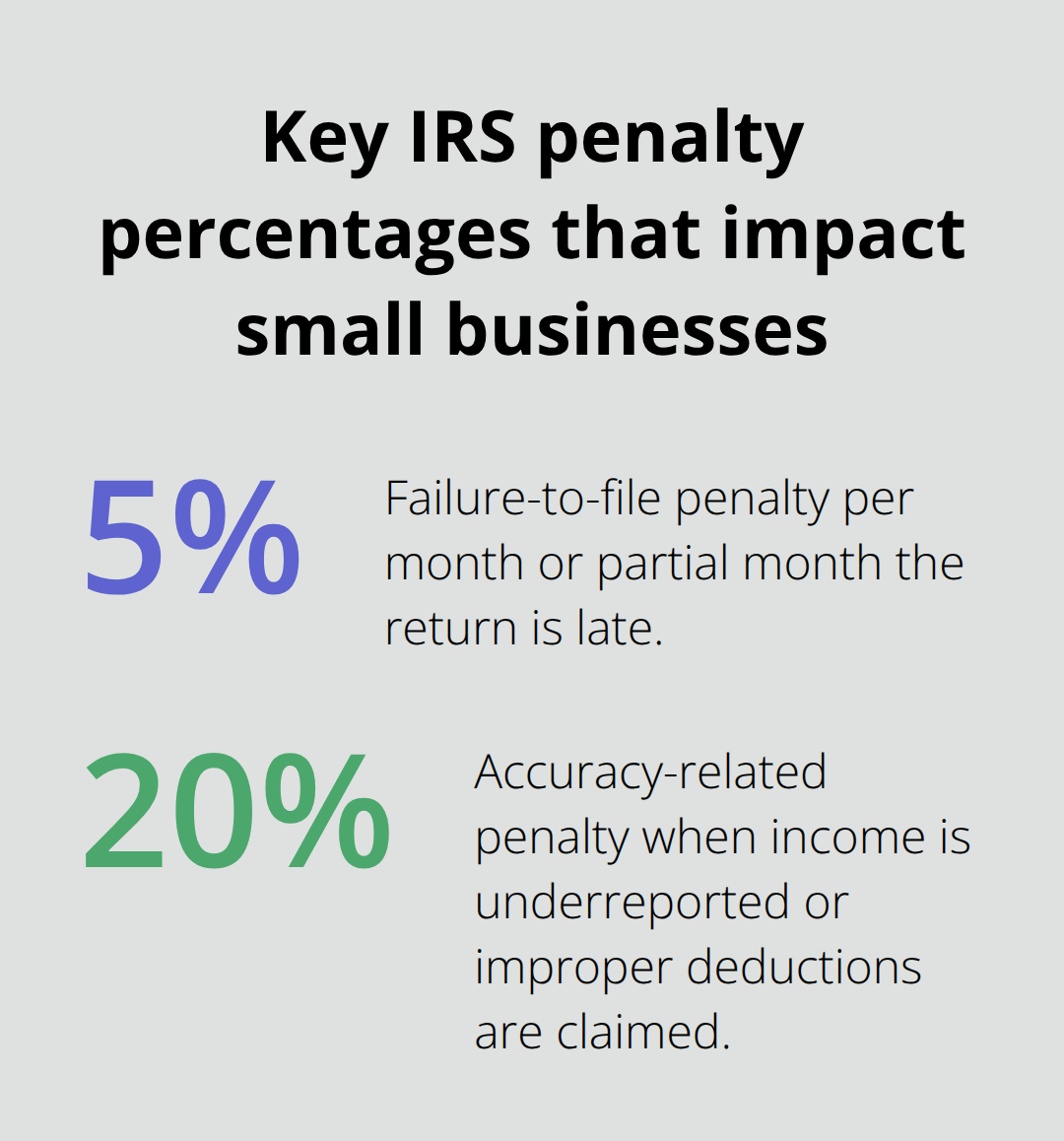
Late filing penalties alone cost small businesses an average of $195 per month according to IRS data, but the financial damage extends far beyond basic penalties. The IRS failure-to-file penalty is 5% of the tax due for each month or partial month the return is late, while accuracy-related penalties add another 20% when businesses underreport income or claim improper deductions.
These numbers compound quickly when businesses miss quarterly estimated tax payments, which triggers underpayment penalties that average $1,000 annually for service-based companies.
Filing Deadline Disasters Hit Hard
Tax deadline mistakes create problems that multiply costs throughout the year. Business owners who miss the March 15 S-Corp deadline face automatic six-month extensions but still owe penalties on unpaid taxes. The IRS processes over 200 million business tax documents annually, yet 30% of small businesses still file late due to poor systems. Electronic filing reduces errors by 60% compared to paper submissions, but many businesses skip this step. Smart business owners set calendar reminders 30 days before each deadline and maintain backup documentation systems that prevent last-minute scrambles.
Entity Structure Confusion Drains Resources
Wrong business entity structure choices cost companies thousands in unnecessary taxes each year. LLC owners often miss the qualified business income deduction which allows eligible taxpayers to deduct up to 20% of their qualified business income, while sole proprietors pay self-employment taxes on their entire income instead of optimization through S-Corp elections. The IRS reports that 40% of new businesses select suboptimal entity structures during formation. Payroll tax misclassification between employees and contractors triggers penalties that average $3,000 per misclassified worker, plus back taxes and interest charges that accumulate rapidly.
Record Maintenance Failures Create Audit Risks
Poor documentation practices expose businesses to audit scrutiny and penalty assessments that drain resources for years. The IRS requires businesses to maintain records for at least three years (seven years for certain situations), yet many companies lose receipts or fail to separate personal and business expenses properly. Mixed expense records complicate deduction claims and create red flags during IRS reviews. Professional bookkeeping services help businesses maintain organized records that withstand audit scrutiny while maximizing legitimate deductions.
How Do You Stop Tax Problems Before They Start
Strategic tax planning transforms compliance from a yearly crisis into a manageable business process. Companies that implement quarterly tax reviews can benefit from improved compliance monitoring according to IRS data, while businesses that use automated expense systems report fewer audit adjustments. The key lies in systems that work throughout the year rather than scrambles during tax season.
Quarterly Reviews Prevent Year-End Disasters
Smart business owners schedule quarterly tax sessions every March, June, September, and December to review income projections and adjust estimated payments. The IRS requires businesses that expect to owe $1,000 or more to make quarterly estimated payments, yet many service businesses underpay these amounts.
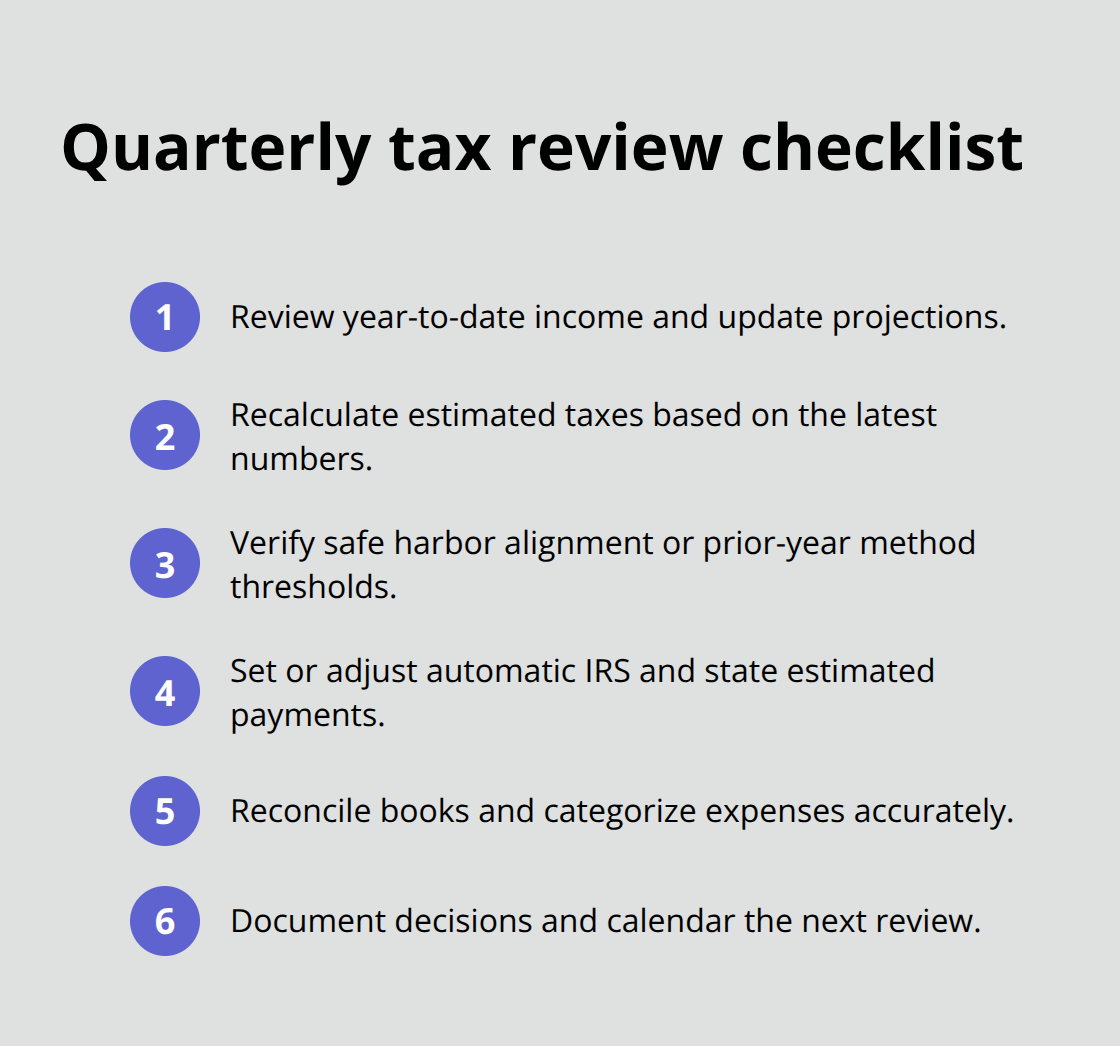
Calculate your estimated tax liability with previous year data plus 10% growth projections, then divide by four for quarterly payments. Set up automatic transfers to a dedicated tax savings account that accumulates 25-30% of monthly revenue for tax obligations. This approach prevents the cash flow crunch that hits when annual tax bills arrive unexpectedly.
Expense Systems That Actually Work
Modern expense management eliminates the shoebox method that costs businesses thousands in missed deductions. Cloud-based platforms like QuickBooks Online automatically categorize expenses when connected to bank accounts and credit cards (a feature that saves hours of manual data entry).
Separate business and personal expenses completely – mixed records trigger audit red flags and disallow legitimate deductions. Document every business meal, travel expense, and office supply purchase with digital receipts stored in folders. Small businesses often miss significant annual deductions due to poor record maintenance, money that stays in your pocket with proper systems.
Payroll Classification Saves Serious Money
Worker misclassification can result in criminal penalties up to $1,000 per worker plus back taxes and interest charges that compound rapidly. Independent contractors must control how, when, and where they work without company supervision or training (while employees receive direct oversight and company-provided tools).
Employees receive W-2s, while contractors get 1099s for payments that exceed $600 annually. The IRS applies a 20-factor test that examines behavioral control, financial control, and relationship type between businesses and workers. Companies with unclear worker relationships should request IRS Form SS-8 determinations before problems arise.
These proactive measures create the foundation for smooth tax compliance, but the right tools and resources can amplify your success even further.
Which Tools Actually Prevent Tax Compliance Disasters
Modern tax compliance requires sophisticated software that automates calculations and tracks deadlines throughout the year. QuickBooks Online dominates the small business market because it connects directly to bank accounts and automatically categorizes transactions, reducing manual data entry significantly. TurboTax Business handles entity-specific forms for LLCs, S-Corps, and partnerships while it calculates the qualified business income deduction automatically, which prevents the calculation errors that trigger accuracy-related penalties.
Software Solutions That Work Year-Round
Drake Tax and ProSeries serve professional preparers with advanced features like multi-state returns and audit trails that satisfy IRS documentation requirements. These platforms update tax forms automatically when the IRS releases changes, which eliminates the version control problems that create compliance gaps. Cloud-based systems provide real-time access to financial data from any location, while desktop versions offer enhanced security for sensitive client information.
Professional Advisory Services Save More Than They Cost
Certified Public Accountants and Enrolled Agents provide expertise that prevents costly mistakes before they happen. Professional tax advisors save small businesses thousands annually through proper deduction identification and entity structure optimization. Enrolled Agents specialize in tax representation and can negotiate with the IRS during audits or penalty disputes, providing services that cost significantly less than the penalties they prevent. The IRS publishes numerous forms and instructions annually, which makes professional guidance essential for businesses that want to avoid substantial penalty rates that affect unprepared companies.
IRS Resources That Actually Help
The IRS Tax Withholding Estimator calculates proper payroll withholding amounts that prevent underpayment penalties, while Publication 535 explains business expense deductions with specific examples that clarify gray areas. Form SS-8 provides official worker classification determinations that protect businesses from misclassification penalties.
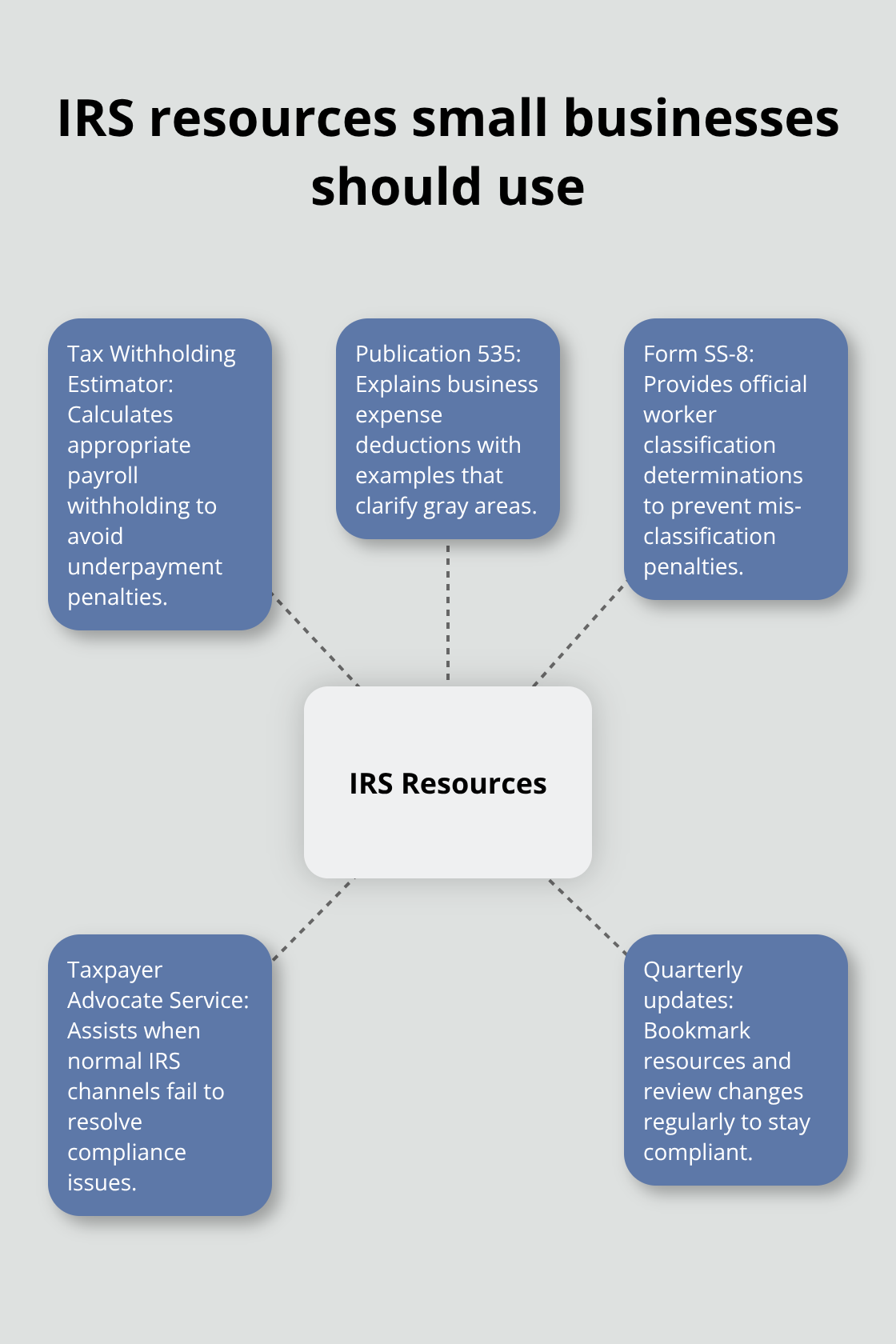
The Taxpayer Advocate Service resolves complex compliance issues when normal IRS channels fail to address problems effectively. Smart business owners bookmark these resources and review updates quarterly rather than scramble during tax season when problems become expensive emergencies.
Final Thoughts
Tax compliance issues require systematic attention throughout the year rather than last-minute fixes during tax season. Businesses that implement quarterly reviews, maintain organized records, and use proper classification systems avoid the penalties that cost companies thousands annually. The combination of reliable software, professional guidance, and proactive planning creates a foundation that withstands IRS scrutiny while it maximizes legitimate deductions.
Professional tax management delivers measurable returns through penalty avoidance and optimization opportunities that often exceed advisory costs. Companies benefit from improved cash flow management when they plan estimated payments correctly and maintain separate business accounts for tax obligations (which prevents the cash flow crunch that hits during annual tax bill payments). The peace of mind that comes from proper compliance systems allows business owners to focus on growth rather than worry about potential audit risks.
Small businesses should seek professional help when they face entity structure decisions, worker classification questions, or complex deduction scenarios. Optimum Results Business Solutions provides expert bookkeeping and accounting services that help maintain compliance while reducing financial management burdens. We work with service-based businesses and tech startups to create systems that prevent tax compliance problems before they become expensive mistakes.